Of Motes


My mother was a tough nut, but I made peace with her before she died.  “I love you,” was the last human sentence she heard.  I spoke it.  I also whispered it at the funeral home as I watched her body slide into the crematory oven.  The technician shut the door, lit the burner, folded his gloved hands, and smiled kindly.  I watched for a while before retiring to a stroll in the surrounding cemetery.  I was given more than a year to prepare for my mother’s death.  What I had forgotten was that the process of death, unlike birth, has an industry, but no product.
Outside, ashes were falling from near the crematory chimney.  As I reached out to catch a large gray flake drifting through the air, it suddenly blew away.  I understood how crematories operate and that flying ash could only come from a hearth-fire in a nearby residence, but I hoped it was my mother.  A few minutes later, as I sat on a shaded bench, a small gray squirrel scrambled up to my feet.  It stood on its hind legs and looked straight into my eyes.  Squirrels have always been good to me, so I bent to give its head a friendly scratch.  I wondered if my mother had sent it.  The little emissary hurried away before I touched it, before I mistook I could touch my mother.
Memories of the dead often dart like unexpected swallows in the evening sky.  Sparked from our cloudy minds, they wheel on sharp wings before dissolving in a mist.  A friend calls them grief motes, though they sometimes make us smile.  My mother was a bigger bird, swan sized, with wings to crack a man’s head.  She should therefore spark a bigger mote with a trumpet call to scare the Hell out of me.  Instead, she’s mostly soft and mute.  Neither a hurried squirrel nor darting bird, she hums softly in the garden, leaving my other grief motes alone.
Life is the product of birth.  Memory, imagination, and death, are processes of life.


May 27, 2013


Jots and Motes


From last night’s little text messaging bout between my young daughter and myself:

                    Me
Me encanta la pequeña rana en el oido.

                    Hana
You sing a little frog in my ear?

                    Me
Sirenas cantar, pero no mientras Dios susurra.

                    Hana
And how would the sirens know
if God whispered,
aside from being alive?
The sea rolling on itself
every day, striking the rock’s face
and somewhere else drowning a good sun?
We doubt the words were spoken.
But where bees’ wings are pinned to the sky
we can see the words sewn into their hem.*

                    Me
I have been one-upped by the best. Nice poem.

                    Hana
Being alive should be living.

                    Me
Dolphins laugh and leap and love the
fate of lovers’ lives who slip the nets.

                    Hana
Love the end.

                    Me
Thanks.
Yes, being alive should be living. Our birth
is gone forever. We can only guess about our
death. Life is all that’s left. Always here, it’s the
only thing we can touch. And we can’t touch the
lives of others if we can’t learn to touch our own.
I touched you at birth. I’ll love you forever.

Writing like this–extemporaneous, undirected–is to writers as Polaroid film used to be to photographers. I’ve spent thirty years carefully calculating shutter clicks and conforming shapes and tones to my mind’s eye. Sometimes, though, my mind seemed to have no eye. Paralysis by analysis, I call it. It describes a total lack of progress despite possession of knowledge, skills, tools, and resources for conquering the world. Sometimes when that happened, I’d grab my old Polaroid camera and head out the door, leaving all calculations and expectations behind.
I’m often struck by paralysis when I need to write. But instead of rummaging through my closet for the Polaroid, I pull my phone from my pocket and tap out a message to someone. No rules. No planning. No expectations. If I catch my daughter in a writing mood, I get back twice what I give.


May 24, 2013


* by Hana Kurahara Sisk


Signs

Gavin W Sisk

Gavin W Sisk


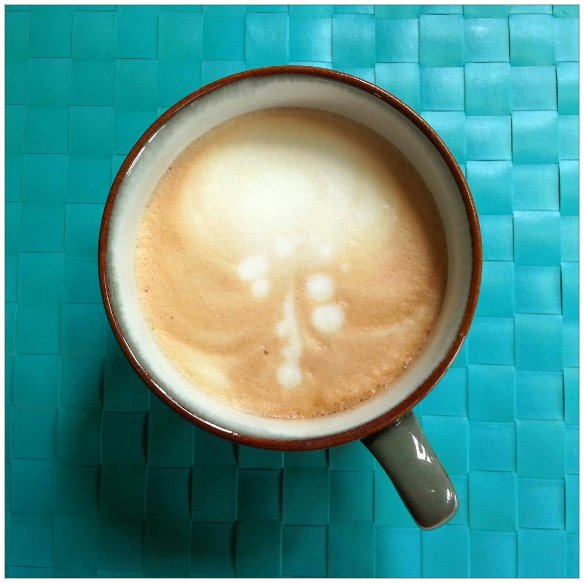
I didn’t make good latte art today.  But it tasted good.  Nicaragua Finca La Tormenta: where the beans were grown.  I haven’t a clue what that translates to.  All I know is it’s a small plantation in some country in Central America.  Nicaragua, I think (duh!).  Does this make me pretentiously provincial?  I’m not certain those two words like how I’ve forced them together.
Anyway, as far as latte foam and inkblot tests go, my first impression was of a nuclear Star Spangled Banner that went horribly out of control on Mars billions of years ago, blasting genetically modified organisms all the way to Earth where they landed in widespread lifeless mud puddles.
If they had missed Earth and instead landed on Venus, would art, politics, and the daily news be different there?  Would Venusians have learned much earlier in their existence that sunbathing is bad for their health?  What arrangement of Earth’s sterile topographical features would they infer as proof of an ancient existence that may have blown itself to smithereens one day after lighting a grossly oversized, celebratory skyrocket?
I can imagine small robotic rovers crawling across the Mojave Desert, searching for elemental signs of life.  They would blast strange frequencies into scoops of dead dirt and transmit the results to anxious two-headed scientists back on Venus who, if lucky and astute, would rightly deduce that Mars was the culprit all along.  Then, after publishing their conclusions and supporting data, they would each be hanged twice for heresy (once for each head).
Or maybe the shape floating in my coffee cup looks like a little jellyfish having a poop.
My therapist takes lots of notes.  I think she’s writing a book.


May 18, 2013


The Big Send Off

Funerary urn for Gwendolyn A. Sisk

My mother is on her way to Spokane.  She went as Express Mail via USPS.  I tried to FedEx her but discovered that FedEx won’t ship cremated remains.  Same for UPS.  So off to the local post office to face the madding crowd.
Not a good day for the madding crowd.  Or rather, a good day to be far from the madding crowd.  And either way, it was a maddening crowd.  The line was out the door and down the side of the building.  Folks at the front of the line had pigeon shit on their heads and shoulders, so I figured Postal Service was even more oxymoronic than usual.
Instead of toughing it out as a stationary target drone for dive-bombing feathered rats, I drove home and took care of the postage from my computer.  It took about ten minutes to open a personal account, input package and service information, and print out a self-stick Express Mail label with paid postage.  All that was left was to drive back to the post office and put the package into the self-serve package drop-off.  Piece of cake!
As I walked up to the self-serve kiosk and positioned my left hand to pat myself on the back, I discovered my package was one inch too large for the self-serve option.  Pigeon shit!
I ended up waiting in line for half an hour so I could simply place the package in front of a live postal person and say, “Here.”  If I had been in a better mood, I would have said, “Here. Take my mother. Please!”  I’m sure my mother would have laughed loudly enough to be heard.


April 15, 2013

None the Less, Nun the More


With a new Catholic pope come old questions about the history and roles of nuns and clergy in modern, and not-so-modern faith.  Nuns and clergy: that the first isn’t considered as part of the second is a shame.  They share the same leaps of faith, the same sacrifices, and the same falls from grace.  But in the end, nuns are just an attachment to the dominion of clergy. In the end, too, the issues of both are often a distraction from larger social issues

These days we talk a lot about priests’ falls from faith. Issues of homosexuality, pedophilia, and general child abuse are better grist for media mills when men are considered.  Equivalent issues about nuns seem to earn winks at best.  When I was a kid, though, it was about the seemingly twisted faith of nuns we mostly talked.  I don’t think there was a single kid in my school whom the nuns didn’t hit.  And we all were hit hard!  During breaks between classes, there were often nuns stationed inside the boy’s lavatory keeping order.  They berated us.  They hit us with rulers, belts, and paddles.  They beat their selves into our long-term memories.
But really, this isn’t only about qualities of nun-ness.  We were hit by lay teachers also.  We were hit by men; we were hit by women.  This was the culture of discipline where I grew up.  The nuns wore black and white uniforms, and so were more uniformly regarded and remembered than their lay counterparts.  And who doesn’t prefer to hear stories of evil nuns.  But whom I conveniently forget to talk about are nuns like the one who took the extra time in fourth grade to teach me short division.
We weren’t allowed to learn short division back then, but this nun recognized that long division was too abstract for me.  This might sound counter-intuitive, even nonsensical, but the woman woke up the right side of my brain to math.  I went from being the class idiot to being the only kid in class who could do division in his head.  
I don’t quickly remember that now.  It’s easier for me to reminisce about the brutality.  Yes, some of those nuns were brutal.  Some of the priests were too.

So, all this isn’t just about nuns and priests.  The subject shouldn’t be only about the bad behavior of certain members of certain groups.  We should also talk about what happens in our society that drives some women and men to seek refuge from life by surrendering to sub-cultures of convents, monasteries, and rectories (picking on Catholicism only) which serve to distill the best and worst human qualities into chalices from which the rest of us drink.  I think forgetting this in our discussions of issues of modern faith is like firing arrows fletch-first at the target.

March 13, 2013


What’s in a Name

Call me Gavin.  Some years ago—never mind how long precisely— I was born as the entity William Gavin John Sisk, which is not the same as the entity Gavin William John Sisk.  The later exists physically, but not legally; the former legally, but not physically.  According to the Social Security Department, the former owns a social security number, while the latter does not.  Nonetheless, the latter, who doesn’t exist legally and who doesn’t own a social security number, is free to ask that a replacement social security card in the name of the former—who doesn’t actually exist—be mailed to the personal address of the latter upon presentation and acceptance of a driver license which positively identifies the requestor to the issuer as somebody other than the owner of said social security number.  The issuer of said social security card expresses full awareness of this discrepancy and freely acknowledges that said card will serve absolutely no useful purpose to either or both the former and/or latter, and advises the latter to change his name to the latter to avoid confusion with the former and to ensure one or the other receives his social security checks when he turns sixty-five, or sixty-seven, or seventy, or whenever the eligibility has been reset to by the time the former or latter (likely both simultaneously) decides to retire from one life or the other—neither of which may the former or latter pursue legally while either languishes in this legal limbo.

Make sense?  You’re reading this on the internet, so it must be true.

The root of this forked-up identity crisis?  Nuns.  The nuns in my elementary school refused to call me by my given name, Gavin, because it isn’t in the bible.  (The names Ron and Larry are in the bible, apparently, but not Gavin.)  I had two first names, William and Gavin; so the nuns elected to call me Bill.  Nuns could do that.  I’m surprised they didn’t call me Zelda.

Anyway, my mother got wind of the nuns usurping her power of maternal attorney and she took swift action.  She sailed right into the Mother Superior’s office at school and explained loudly how all this worked.  She proclaimed in her Ahab manner, “I name my children; you teach them!”  My mother was an ex-nun; she could say that.  The previous year, after discovering the nuns were getting physical with her kids, she proclaimed to the Mother Superior (the Great Whale), “I’ll hit my children; you teach them!”  Believe me; my mother could hit us a lot harder than any nun could.

It turned out my mother only scored one-for-two against the nuns.  They still called me Bill, relying on the order my names appeared on my birth certificate for their authority.  On top of that, they called my brother, Toney, by another name, John.  Apparently, the name Toney isn’t in the bible either.  That made my mother one-for-three.  I suppose all this was my mother’s version of my present dealings with the Social Security Department.

For my mother, one-for-three with a harpoon wasn’t an acceptable score.  So one day she hauled my brother and me down to the county courthouse to have our names changed.  From William Gavin John Sisk, my name changed to Gavin William John Sisk.  Somehow, my brother’s name was also made nun-proof.  My mother had the last word and the nuns’ hands were forced.  My mother’s score: three-for-four.

Like my mother, the school’s Mother Superior is now long dead.  Could it be that mixed with the Great Whale’s last Hail Mary was a little hex against the son of her old adversary?  “Hail Social Security, be filled with grace. Blessed is the fruit of thy wrong vision…”

The final score: a dead heat.


March 5, 2013
__________________________________________

Edit, March 13, 2013–

I received my new social security card in the mail a couple of days ago.  Printed on it is the name, William John Sisk–a version of my name I have never before used.  Social Security utterly ignored my given name, Gavin.  From the grave, the nuns prevail.

Call me Zelda.

–Gavin W Sisk
 

Cat Mood

Left for the day.
Forgot to feed the cat.
Bitching, moaning, whining,
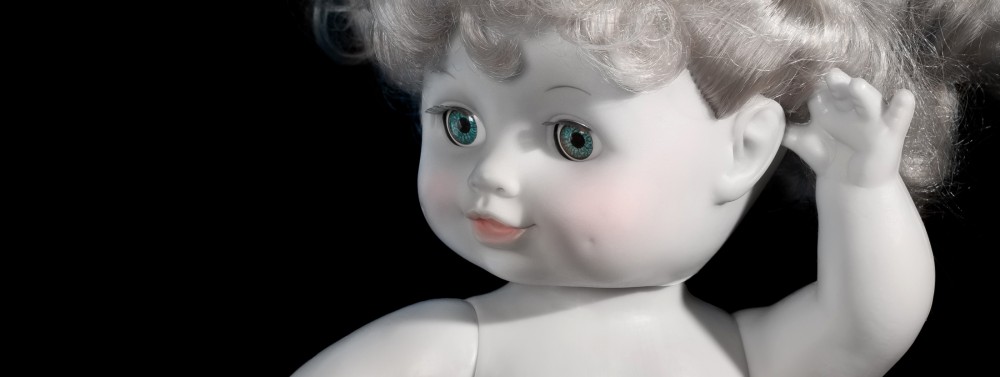
and plodding like a miniature calico
draft horse around her empty kibble bowl.
Goddamn my sorry hairless Homosapien soul!
Filled the bowl and tickled her ticked-off nose—
hedged with a herring carcass on the heap.
Mea culpa. Cope with my caresses, Miss.
Don’t finger me your twitchy tail.
No, you took a bite or two,
pranced to the door,
left for the night.


Jan. 2013


A Short Prayer

The star of the movie, A Bronx Tale, is a kid who says early on, “The best thing about being Catholic is you go to confession every week and then you start all over.” It did feel like that when I was his age. I thought the secret to living well and getting into heaven was to go to confession regularly. Barring that, in an emergency a quick Hail Mary would work. Trapped in a crashing plane? No problem! I could fully enunciate the prayer in five seconds.

So what did many Catholic kids like me learn? Grace, apparently, decays rapidly after confession, and the only seconds of our lives that count toward salvation are the last five. We have just that much time to convince God to ignore all the preceding seconds, minutes, hours, and days.

Yes, I know. We should figure out how to make every moment count. Too often, though, we develop bulimia in our souls, stuffing more prayers at a time down our throats than our destinies can digest. Or maybe we’re like the goldfish rising to a pond’s surface to gulp a bubble of air–a gas it cannot respire but which offers temporary equilibrium. Perhaps if fish could pray and tell time, they would be like us, and thus be saved.


Dec. 25, 2012


A Ring

A brass ring hooked and
slipped into her purse,
with the credit cards
and the plastic case
with the oblong pills.
A journey to the center
of her pendulating heart.

French Antilles blue framed
by fuming hurricanes
does not un-map the strain.
Unforgiven adolescence
is a cultivated state,
and brass rings don’t shine
in the bottom of a bag.


Nov. 2012