Fall Field
Plowed down fallow field,
Magpie steals and cries.
Dried clod in denim roll,
Morning glory rise.
Black hawk wheels on wing,
Spinning windmill sighs.
Dark smoke drags machine,
Morning glory dries.
G W Sisk
April 2010
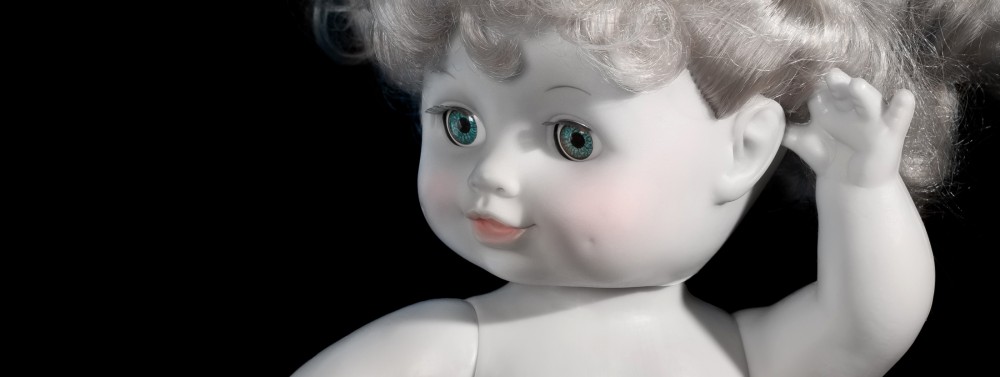

Fall Field
Plowed down fallow field,
Magpie steals and cries.
Dried clod in denim roll,
Morning glory rise.
Black hawk wheels on wing,
Spinning windmill sighs.
Dark smoke drags machine,
Morning glory dries.
G W Sisk
April 2010

Hanae Rose Kurahara Sisk
Your mother’s womb fit perfectly.
You couldn’t even turn to leave.
So, the doctor pulled you loose
through a hand-cut hatch,
and changed your blue surprise
into naked crimson cries.
We warmed you in white linen.
Wrapped your shivering soul
as tightly as we dared,
and marveled at your instinct as
you made sense of Mother’s breast.
We named you, Hanae, our best.
June 18, 2011
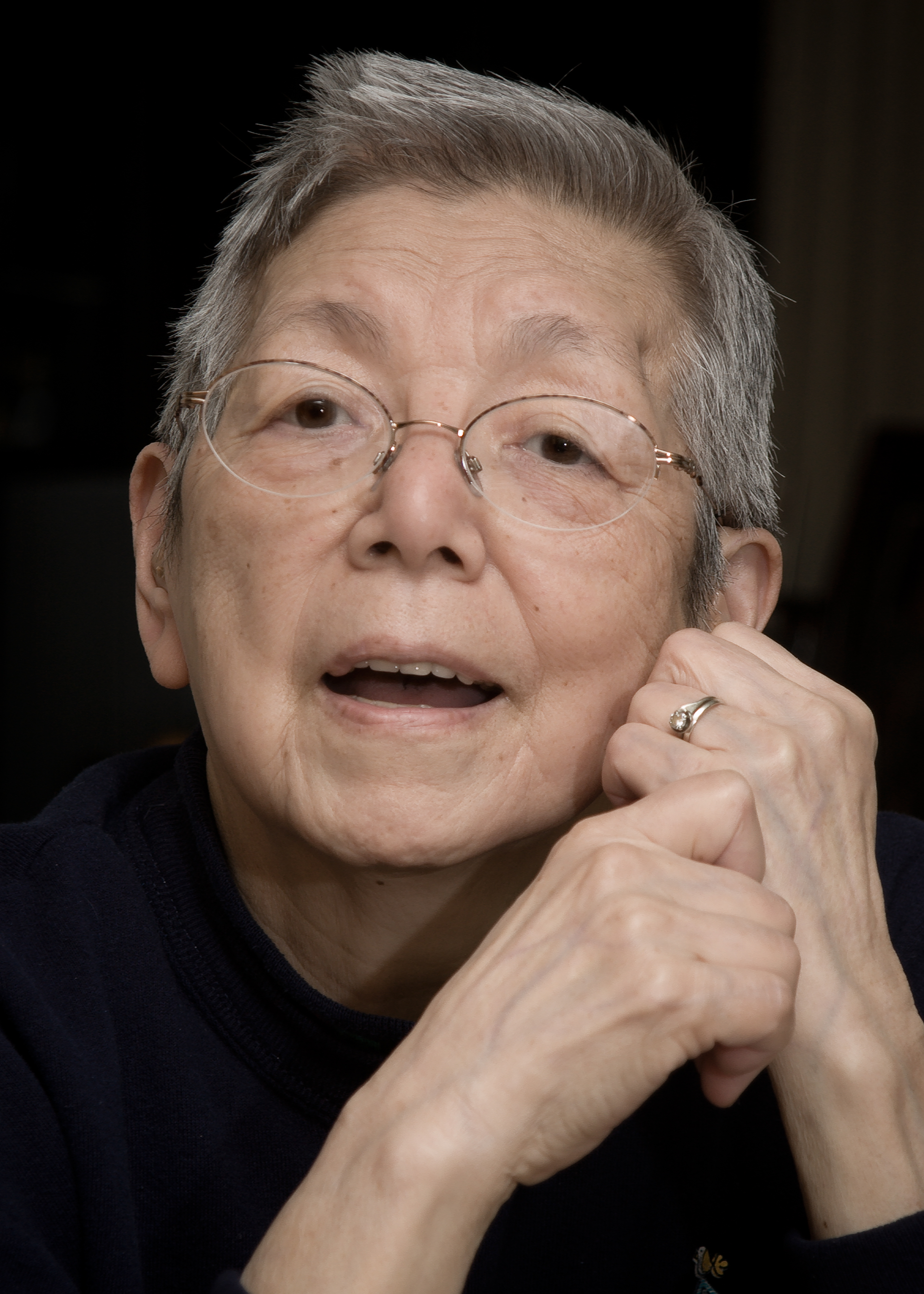
Shizuka Okazaki, 1922 – 2010
First born. Quiet.
Cooled in her mother’s arms
By a pear-scented island breeze.
Walked, ran, worked.
Life, family, duty.
The fields, the hotel.
Clean sheets and old men.
For father and mother,
One foot in front of the other.
Then horse stalls and Minidoka.
Warmed by her mother’s arms
And a tar-scented iron stove.
Walked, ran, worked.
Life, family, duty.
The barbed wire, the garden.
Clean sheets and sentries.
For country and each other,
One day in front of the other.
Then, finally, ordinary days.
Yielding to another’s arms.
Sewing machines and a family.
Walked, ran, worked.
Life, family, duty.
Salt air and gray hair.
Clean sheets pulled to her chin.
Issei, Nisei, Sansei mothers,
One stitch in front of the others.
March 2010
Due to my failure to carry out my home duties this Spring, there are thousands of healthy weeds in my back yard. Frustrated by the mess, last week I compelled myself to work into the darkness to pull up many of the largest weeds, which mostly were the tall and sturdy foxgloves. The correct strategy is to grab each weed as low to the dirt as possible so that the roots come out with the stalk. But at night, creatures roam across the moist soil whom all of us garden warriors love to hate.
I wasn’t wearing gloves, and I didn’t have a flashlight. I had only moonlight and my stupidity to guide me. Thus, I guided my left hand through the fog of battle to a vague silhouette of a particularly thick foxglove stalk which I grabbed with all my strength. It turned out that half of the stalk’s thickness was accounted for by the fat girth of a six-inch slug, which I didn’t see until it was too late. As I pulled hard with my naked hand, the slug instantly converted itself into a palmful of mortally wounded grease. I almost fell on my ass!
This was my third intimate encounter with a giant slug in the last two months. My previous encounters were transmogrifying and had left me feeling emotionally damaged. But this night’s encounter affected me differently. This time I had already accepted the risk and potential cost of such an encounter, and I understood my obligation to recovering my lost territory with minimal use of deadly chemicals.
I wiped the slime from my skin with handfuls of dirt. After surprisingly little cursing, I bent into the same patch of weeds and continued pulling up the foxgloves as the clouds above me extinguished the last of the moonlight. There are many greater insanities than this.
They say that war makes sane men do insane things. I believe it. I also believe that after you’ve sent a few dozen anxious bullets toward vague shapes stalking the shadows of broken buildings and dead orchards, your regard for other lives changes, along with your regard for your own life.
The moral shape of war requires that soldiers don’t ask the wrong questions. The reality of properly functioning soldiers requires their willing resignation from life before the battle’s first shots are fired. Their commanders have the difficult tasks of ruling the battle field while calculating and accepting casualties, administering rules of engagement, ministering to the surrendered lives of the surviving soldiers, and not asking the wrong questions.
After a battle there is time to wonder. The survivors may curl on their cots and measure their luck with each breath. But it’s a rude respiration that has a tired soldier inhaling a familiar soul into his altered mind before needing to exhale it once again in time for the next battle.
I never joined the military. Partly, I didn’t want to die young, and I didn’t want any bullet of mine to take old age away from someone else who didn’t want to die young. More than just partly, I’ve always worried that I would have been too good a soldier to question the insanity of war.
June 26, 2011
My mother was once a nun. She was not Mother Teresa. In fact, she was a nun only for a few years and never took her final vows. In her early twenties she entered a high-walled cloistered convent outside Spokane Washington, joining other young women who, like herself, were seeking relief from secret burdens. But the quiet habit of my mother’s vows failed to silence the din of her spirit. She was intelligent, and soon realized as she knelt her afternoons away in silent prayer that her knees were being exercised more than her mind. So, she left.
I know few details of the long intermission that played between the morning she walked out the quiet doors of that convent and the afternoon, years later, when she walked out the doors of a church with my father and a bouquet in her arms. I know that typewriters, travel, rivet-riddled B-24s, and a torrid romance with a bomber pilot are pieces of the story of her earlier years. In a somewhat un-Catholic way she had been around the block. At the same time, she was quite catholic in her worldview: catholic within the Latin meaning of ‘all embracing’. She followed the sun and moon from one American ocean to the other, train-splitting the brow of our Continental Divide along her way. She ended her personal tour of duty where she began, Spokane, where she met and fell in love with a young, handsome English professor who had himself been busy being both catholic and Catholic.
For most women in those days, unfortunately, accepting a Catholic marriage often meant surrendering a truly catholic life. My mother must have considered our home a convent furnished with a husband, six kids, and a deranged dog. But it’s hard to keep a good woman down—nor did my good father dare to try. This woman ruled our roost, as well as all other roosts that weren’t well guarded. She laughed, shouted, and cried while she drank red wine and rationalized her position. She cursed Saint Paul and most priests, but she silently surrendered her rosary to Mother Mary. She also told jokes and stories that often only the local Jesuits would dare to laugh at.
The first story I remember my mother telling to me was about an awkward young novitiate in a cloistered convent. This young nun-to-be accepted many menial and difficult duties, and she was desperate to impress the other nuns with her dedication and piety. Indeed, her vow of silence prevented her from complaining.
As one of her daily tasks she cooked and served evening meals to the other nuns. One particular evening she labored diligently but silently to prepare an especially beautiful casserole. She prayed that the Mother Superior would finally recognize her sincere dedication and offer her the opportunity to take her final vows, along with a ranking seat at the dinner table. The young woman was quite anxious as she brought the hot casserole from the kitchen. She was so anxious that she failed to properly mind her feet as she stepped over the threshold at the dining room entrance.
She tripped! She watched in horror as her beautiful casserole flew through the air before tumbling across the dinner table and landing in the startled Mother Superior’s lap. Instinctively the novitiate cried out, “Oh Hell!” She paused only for a moment before clutching the sides of her short black veil and exclaiming in disbelief, “Oh damn, I said Hell!” Then, as quickly, “Oh God, I said damn!” Then, not so quickly, she dropped her hands to her side, turned around, and walked slowly back through the dining room entrance muttering, “Oh shit! I didn’t really want to be a nun anyway.”
It delighted me to hear my mother tell that story. I had never heard her use the ‘S’ word in my presence. Some time later, after she had heard me repeating the story to somebody else, I was severely punished. My mother seemed not to be able to be catholic and Catholic at the same time.
The last story my mother told to me before she died was about an honest and righteous man. He was a hard-working man who honored his family and church and was a stout pillar of his community. His piety, honesty, and hard work eventually earned for him a wealthy life on earth. At the peak of his wealth, however, he began to reflect on a simple caution his grandmother had uttered to him from her deathbed. She told him what we’ve all heard many times: “You can’t take it with you!”
Gradually the man gave away his earthly possessions until at the end of his long and righteous life he was a virtual pauper. After his death he immediately found himself at the bright gates of heaven where smiling Saint Peter waited for him with open arms.
“Welcome, my son!” cried Saint Peter.
“I’m so happy to finally be here!” exclaimed the man.
“Well, you’ve certainly earned your place,” Saint Peter answered.
Then Saint Peter paused. He looked all around where the man was standing before furrowing his brows quizzically and asking, finally, “So, tell me my son, where’s all your stuff?”
I tended to my mother the evening before she died of cancer. As her body began to cool, I leaned over her bed, kissed her pale cheek, and whispered into her ear, “I love you, Mom.” I thought she was unconscious. But she opened her smiling eyes and said, weakly, “I know.”
You can’t keep a good woman down.
June 26, 2011

Seattle’s First Avenue South drawbridge needs only small electric motors to open and close for ship traffic on the Duwamish River. It opened this evening as I raced toward it on my way to the driving range. I should have remembered the bridge operator senses my impatience and tight schedules.
When the bridge opens and car traffic stops, most drivers remain in their seats with their engines idling. But some of us veterans prefer to shut our engines and radios off and get out to stretch our legs. As I strolled to the bridge railing to photograph the silently rising deck, the driver of a nearby SUV walked over to greet me.
“You want see two roast pigs?” he asked in broken English.
He was a small Filipino man with front teeth missing from his broad smile. He asked again. “You want see my roast pigs?”
“Sure!” I answered.
I have this experience often. Strangers introduce themselves as if my face has the shape of a friendly question mark. The man led me to the back of his SUV and lifted the hatch. Lying side by side on the floor in two long, foil-lined boxes were two perfectly browned pigs, stretched out like supplicants before an alter. Despite the context of stopped traffic on a busy American highway, they looked shockingly beautiful. Rather than dead, they looked proud and sanguine, as if they had volunteered from their herd.
“They for a christening,” the man said as he adjusted the foil near the plump snout of the pig on the left.
“A christening? That’s wonderful. Congratulations!” I told him as I held out my hand. But the man stepped back a little, explaining, “Oh, no. The pigs, they not for me; they for a friend. Whenever there a christening, everybody ask me roast pigs for them.”
I held out my hand once more. “Please, offer your friend my congratulations.”
This small re-direction made all the difference. The man vigorously shook my hand, saying happily, “Thank you very much! I tell him.”
As the drawbridge began to close, he shut his hatch, smiled once more, and returned to his driver’s seat. I waved to him and returned to my car. The two halves of the heavy bridge united, returning patience and order to the road.
I didn’t know the man I met. Yet, I understood the meeting. Two small motors can move two thousand tons of steel, but two small pigs can move two thousand years of faith.
June 26, 2011
One of my favorite subjects to wonder about is the nature of human perception. I wonder especially about the nature of our commitment of leisure towards exploring and describing perceptions that are fundamentally un-perceivable, such as God and infinity. These endeavors and perceptions are largely the basis of culture. When we attempt to rationalize these perceptions, we face the same predicament a bird would if it tried to explain air to a fish. A phenomenologist might write five books as a frontal assault on the subject (and be granted tenure). A Buddhist monk would just sit very still under a tree and wait for enlightenment to arrive on a breeze. A poet or artist might accept the task is impossible, and instead tease out meaningful and unexpectedly related perceptions that somehow work their way from the edge of the mind’s retina to its central nerve of comprehension.
Holy Order
Anthropologist: a man
smelling another man’s hands.
Poet: a man
smelling his own hands.
Philosopher: a man
smelling with his hands.
God: among us
smelling our hands.
G W Sisk
Sept. 2010
I often start a poem while reclining on my living room couch. The first lines sometimes sit down next to me, like a smart woman wearing a blouse with one unfastened button too many. My nosey cat, Rosie, understands that writing poetry shouldn’t be so easy. She doesn’t wear a blouse, but she understands a lot about buttons.
Rosie
Rosie, I’m trying to write!
While you examine my leg
with unmanicured nails,
and sound my heart with purrs,
you bother my hand with
your head hard as marriage
(yet, warm as your affairs).
I’m arguing with myself,
and fighting presbyopia.
Have what you want!
Must this be all I get:
a wrinkled impression
of the man on the moon
I see at the base of your tail?
G W Sisk
June 26, 2011
Wiping their brows are women and men who have devoted their ovaries and testicles toward producing offspring since before they were old enough to know what ovaries and testicles were: the biological foundations of their future parental authority and desire.
Also wiping their brows are women and men who never predicted they were well designed as mothers and fathers. Barbie dolls, Easy Bake ovens, pastel colors, and plastic tea sets do not accomplish as much to establish a woman’s maternal authority and desire as does a swelling belly preceding the suddenly naked fact of a suddenly naked baby just pushed from a suddenly emptied womb. To new mothers, of course, ‘suddenly’ is measured and remembered much differently than some men appreciate. What some fathers do suddenly appreciate is that toy action figures, cap pistols, camouflage jeans, and baseball bats may be unsuitable in preparing for the naked realities of their new life roles, and their own paternal authority and desire.
Stretched out before all of us parents is a wide and mysterious range of personal expectations, realizations, and epiphanies. My own first paternal epiphany occurred not in the operating room, where I first held our newborn daughter, but later, as I watched her instinctively make sense of her mother’s swollen breasts. I realized then how little it could matter that I had speared an antelope, or had come home with my shield instead of on it, or had put the harvest safely in its silo, or had earned a promotion at work. Only a mother has a womb and breasts and can bear and nurse a child. I could provide sperm for the mother’s egg, and I could certainly defend and nurture the process of pregnancy. But even with those contributions, I could easily misunderstand my responsibilities and authority and mistake my true paternal role.
The facts of the biological differences between women and men should never distinguish either above the other: socially, politically, economically, spiritually, or personally. But as the pressures of biological evolution yielded to those of cultural evolution, we somehow came to accept seemingly inevitable sacrifices and compromises. Unfortunately, we accept and perpetuate them to this day.
How we play as children comprises a history of this process and tries to predict its future. The best hope for our future may not be so much in the hands of prospective parents who have known and practiced what they have wanted since their childhood, as it may be in the hands of parents who have subconsciously doubted their desire and ability to make the sacrifices and compromises necessary for perpetuating this process. In either case, there are records of horrendous failures and spectacular success. In the latter case, however, we may more likely find the cultural equivalent of subtle genetic anomalies that could lead our species closer to the next successful step in our evolution.
This is a romantic idea, of course. And as a man, I feel pre-disposed to presume that the rude physicality of our existence requires me to always guard the entrance to my cave from marauders and usurpers, as well as from escapees. As a man in this culture, I am not pre-disposed to thinking I could be wrong about this. As an educated human being who has tried to be less pre-disposed about any such matters, I would like to dispose of this whole process—if I could do it without sacrificing the treasures of our civilizations. I will do what I can, but the task is complicated and life is short. Ultimately, our hopes should fall upon the swollen breasts of motherhood. Though we should always remember and depend on this, we seem to so just one day each year.
Nonetheless, I say happy Mother’s Day. Forgive us.
May 8, 2011
While heading to my bedroom last night, I stopped to check on my daughter. When I stroked her arm, she lifted her head and asked, “Is that you Daddy?”
I told her yes and asked if she was awake.
She answered, “No, but my mouth is. I probably won’t remember this in the morning.”
I promised to remind her and said, “Good night Hana. I love you.”
As she rolled over she replied, “Good night, Daddy. I love you more.”
Semi-conscious children never lie.
May 6, 2011
A Literary Journal
An Independent Nondiscriminatory Platform With No Religious, Political, Financial, or Social Affiliations - FOUNDED 2014
A Satirical Word In Your Shell-Like Ear
inken thought
Musings on poetry, language, perception, numbers, food, and anything else that slips through the cracks.
what if poems could be symphonies, and people their orchestra?
All That Glitters Is Not Gold
a childhood poetry archive.
Random thoughts that are too big to fit into 160 character blocks...
Just another day of gossip in paradise.
The latest news on WordPress.com and the WordPress community.
 Deviations Toward Normal